
In orthopedic surgery, precision matters at every step. The instruments used during a procedure must support the surgeon’s technique, meet the demands of the operating room, and be suitable for the intended surgical application. This is particularly important when working with bone, where controlled cutting and appropriate instrument selection play an essential role.
An orthopedic oscillating saw is a specialized surgical instrument designed to cut bone using a rapid back-and-forth blade movement. It is used in selected orthopedic procedures where controlled bone cutting is required.
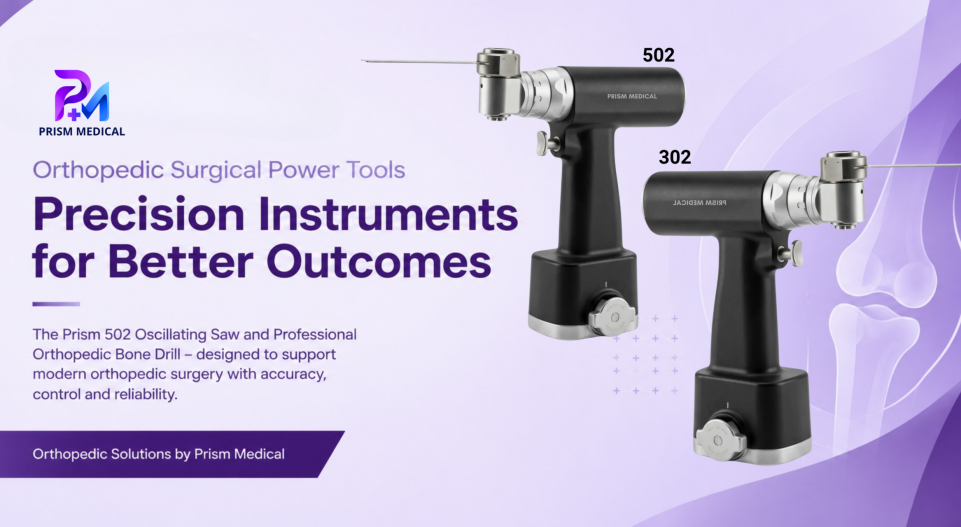
At Prism Medical, we focus on orthopedic and surgical instruments developed to support the needs of modern healthcare professionals. In this article, we introduce the Prism 502 and Prism 302 orthopedic oscillating saw models and explain the key considerations when selecting an oscillating saw for orthopedic applications.
What Is an Orthopedic Oscillating Saw?
An orthopedic oscillating saw is a powered surgical instrument that moves its blade through a rapid oscillating motion rather than continuous rotation. This movement allows the instrument to perform controlled bone-cutting tasks when used with a compatible blade and the appropriate surgical technique.
Oscillating saws are used in various orthopedic procedures, including selected joint replacement surgeries, bone reshaping, and other procedures requiring precise bone cuts. The specific application depends on the instrument configuration, compatible blade, and surgeon’s requirements.
Unlike a conventional rotating saw, an oscillating saw moves its blade back and forth through a defined arc. This difference in motion makes it suitable for certain surgical cutting applications.
Introducing the Prism 502 and Prism 302 Orthopedic Oscillating Saws
Choosing the right surgical instrument involves more than looking at its model number. Healthcare professionals need to consider the intended application, handling, compatibility, maintenance requirements, and the demands of their surgical environment.
The Prism 502 and Prism 302 orthopedic oscillating saws are two models featured in Prism Medical’s orthopedic instrument range.
Both models are relevant to healthcare professionals exploring orthopedic oscillating saw options. Before selecting either model, users should review the manufacturer’s product specifications, compatible accessories, operating instructions, and intended use to determine which configuration meets their requirements.
At Prism Medical, our aim is to help healthcare professionals and medical procurement teams explore orthopedic instrument options with clear product information and professional support.
Why Are Oscillating Saws Important in Orthopedic Surgery?
Bone-cutting instruments are an important part of many orthopedic procedures. An oscillating saw can support the surgeon in performing the bone cuts required for a particular surgical technique.
Here are some important considerations when evaluating an orthopedic oscillating saw.
1. Controlled Cutting Motion
The oscillating mechanism produces a back-and-forth blade movement that can be suitable for specific bone-cutting tasks. Appropriate instrument selection and surgical technique remain essential to achieving the intended result.
2. Instrument Handling and Ergonomics
The design, grip, weight, balance, and handling of a powered surgical instrument can influence how it feels during use. Healthcare professionals should assess these factors in relation to the intended procedure and their operating-room requirements.
3. Blade Compatibility
Blade selection is an important consideration when evaluating an oscillating saw. The blade must be compatible with the instrument and appropriate for the intended surgical application.
Always confirm compatibility using the manufacturer’s documentation before use.
4. Cleaning and Maintenance
Reusable surgical instruments must be processed according to their validated instructions for cleaning, disinfection, sterilization, and maintenance, where applicable.
Before selecting an oscillating saw, healthcare facilities should review the relevant instructions for use and confirm that the instrument fits their established reprocessing protocols.
5. Suitability for the Intended Procedure
Not every oscillating saw is suitable for every orthopedic procedure. Selection should be based on the instrument’s intended use, verified specifications, accessories, and the requirements of the surgical team.
Prism 502 vs. Prism 302: What Should You Consider?
If you are comparing the Prism 502 and Prism 302 orthopedic oscillating saws, begin by reviewing their verified product specifications rather than assuming that one model is more powerful or suitable than the other.
The following checklist can help healthcare professionals, distributors, and procurement teams assess both options.
Evaluation factorWhat to verifyIntended applicationWhether the model is indicated for the required orthopedic proceduresPower systemThe specified power source and operating requirementsBlade compatibilityApproved blade types and attachment mechanismHandlingInstrument weight, grip, balance, and usabilityReprocessingManufacturer-approved cleaning and sterilization instructionsMaintenanceInspection, servicing, and maintenance requirementsDocumentationInstructions for use, product information, and applicable regulatory documentation
The exact differences between Prism 502 and Prism 302 should be confirmed using their respective technical datasheets and manufacturer documentation. This ensures that purchasing decisions are based on accurate, model-specific information.
How to Choose the Right Orthopedic Oscillating Saw
Selecting an orthopedic oscillating saw requires a practical understanding of the intended application and the instrument’s specifications.
Start with the procedure. Identify the type of orthopedic work for which the saw is being considered and check whether the instrument is indicated for that application.
Review the technical details. Compare the power system, blade compatibility, operating characteristics, and other specifications documented for each model.
Consider operating-room requirements. Handling, cleaning, sterilization, storage, and maintenance requirements should align with the healthcare facility’s procedures.
Check product documentation. Ensure that the relevant instructions for use, compatibility information, and applicable regulatory documentation are available.
Consult the supplier. If you are unsure which model is appropriate, request verified technical information from the supplier before making a purchasing decision.
Taking these steps helps healthcare facilities make informed decisions based on suitability, documentation, and operational requirements rather than model names alone.
Why Choose Prism Medical for Orthopedic Instruments?
Prism Medical provides orthopedic and surgical instrument solutions for healthcare professionals and institutions.
Our focus is on supporting customers who are looking for relevant product information, dependable service, and professional assistance when exploring medical equipment options.
Whether you are researching the Prism 502, the Prism 302, or other orthopedic instruments, understanding the product’s intended use and technical specifications is an important part of the selection process.
We encourage healthcare professionals, hospital procurement teams, and medical distributors to contact Prism Medical for further information about product availability, specifications, and purchasing enquiries.
Frequently Asked Questions
1. What is an orthopedic oscillating saw used for?
An orthopedic oscillating saw is a powered surgical instrument used for controlled bone cutting in selected orthopedic procedures. Its suitability depends on the instrument, compatible blade, and intended surgical application.
2. What are the Prism 502 and Prism 302 oscillating saws?
The Prism 502 and Prism 302 are models identified within Prism Medical’s orthopedic oscillating saw range. Their individual features, specifications, and intended applications should be confirmed using the relevant product documentation.
3. What is the difference between the Prism 502 and Prism 302?
The precise differences should be established by comparing their official technical specifications, including the power system, operating characteristics, blade compatibility, and maintenance requirements. Consult Prism Medical for verified model-specific information.
4. How do I choose an orthopedic oscillating saw?
Consider the intended procedure, instrument specifications, compatible blades, handling, reprocessing requirements, and manufacturer documentation. The selected model must be appropriate for its intended use.
5. How can I enquire about Prism Medical oscillating saws?
Visit the Prism Medical website at https://prismsmedical.in/ to explore the company’s product range and contact the team for product information and business enquiries.
Explore Orthopedic Instrument Solutions with Prism Medical
The right orthopedic instrument begins with understanding the procedure, reviewing the specifications, and choosing equipment appropriate for the intended application.
If you are exploring the Prism 502 or Prism 302 orthopedic oscillating saw, contact Prism Medical to request product information and discuss your requirements.
Prism Medical — Precision. Quality. Reliability.
Important note: This article is intended for general product information and educational purposes. Always consult the manufacturer’s instructions for use and verified product documentation before selecting or using a surgical instrument.